
Do oxygen absorbers remove all oxygen from a container?
As a supplier of oxygen absorbers, I often encounter questions from customers about the effectiveness of our products. One of the most common inquiries is whether oxygen absorbers can remove all oxygen from a container. In this blog post, I will delve into this topic and provide a detailed answer based on scientific principles and real - world applications.
Understanding Oxygen Absorbers
Oxygen absorbers are small packets or sachets filled with substances that react with oxygen. The most common active ingredients in oxygen absorbers are iron powder. When iron reacts with oxygen in the presence of moisture, it forms iron oxide (rust). This chemical reaction consumes oxygen from the surrounding environment, thereby reducing the oxygen level inside a container.
The reaction can be represented by the following simplified chemical equation:
4Fe + 3O₂ + 6H₂O → 4Fe(OH)₃
This reaction is exothermic, which means it releases heat. However, the heat generated is usually minimal and does not pose a significant risk to the contents of the container.
Can Oxygen Absorbers Remove All Oxygen?
In theory, oxygen absorbers have the potential to remove all oxygen from a container. However, in practice, achieving a complete oxygen - free environment is extremely challenging. There are several factors that affect the ability of oxygen absorbers to remove all oxygen:
- Container Seal: The effectiveness of oxygen absorbers depends largely on the quality of the container's seal. If the container is not properly sealed, oxygen from the outside environment can continuously enter the container, counteracting the efforts of the oxygen absorbers. Even a small leak can prevent the oxygen level from reaching zero.
- Absorber Capacity: The capacity of an oxygen absorber is determined by the amount of active ingredient it contains. Different sizes and types of oxygen absorbers have different oxygen - absorbing capacities. If the volume of the container is large relative to the capacity of the oxygen absorber, it may not be able to remove all the oxygen.
- Reaction Rate: The reaction between the active ingredient in the oxygen absorber and oxygen is not instantaneous. It takes time for the reaction to occur, and the rate of the reaction can be affected by factors such as temperature and humidity. In some cases, the reaction may slow down or stop before all the oxygen is removed.
Real - World Applications and Limitations
In food packaging, oxygen absorbers are widely used to extend the shelf life of products. By reducing the oxygen level, they can prevent oxidation, mold growth, and the development of off - flavors. However, in most food packaging applications, it is not necessary to remove all oxygen. A significant reduction in oxygen level, typically to less than 0.1%, is sufficient to achieve the desired preservation effect.
For example, Factory Supply Oxygen Absorber Used In Kinds Of Food Package is a product that is designed to be used in various food packaging applications. It can effectively reduce the oxygen level in the package, but it may not completely eliminate it.
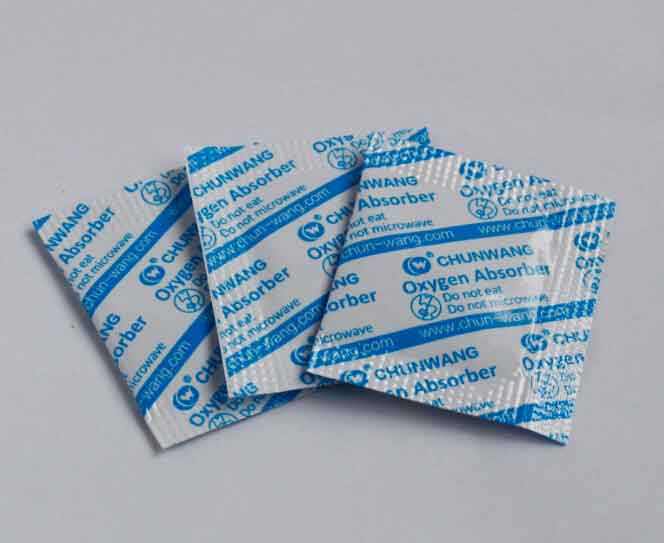

In the case of long - term food storage, such as in a survival kit or a pantry, O2 Absorbers For Food Storage 300cc can be used. These absorbers are specifically designed to maintain a low oxygen environment over an extended period. However, even with these high - capacity absorbers, it is difficult to achieve a completely oxygen - free environment.
Another application is in the storage of peeled garlic. Peeled Garlic Use CO2 Absorbers can be used to control the oxygen and carbon dioxide levels in the storage container. While these absorbers can significantly reduce the oxygen level, they may not remove all oxygen.
Maximizing the Effectiveness of Oxygen Absorbers
To maximize the effectiveness of oxygen absorbers, it is important to follow these guidelines:
- Choose the Right Absorber: Select an oxygen absorber with the appropriate capacity for the size of the container. Consider the volume of the container and the amount of oxygen that needs to be removed.
- Ensure a Good Seal: Use a container with a tight - fitting lid or seal. Check for any leaks before using the oxygen absorber.
- Control the Environment: Store the container in a cool, dry place. High temperatures and humidity can affect the reaction rate of the oxygen absorber.
Conclusion
In conclusion, while oxygen absorbers can significantly reduce the oxygen level in a container, it is extremely difficult to remove all oxygen. However, for most applications, a significant reduction in oxygen level is sufficient to achieve the desired preservation effect. As a supplier of oxygen absorbers, we are committed to providing high - quality products that can effectively reduce oxygen levels and extend the shelf life of various products.
If you are interested in purchasing our oxygen absorbers or have any questions about their use, please feel free to contact us for further discussion and procurement negotiation. We look forward to working with you to meet your oxygen - absorbing needs.
References
- Smith, J. (2018). Oxygen Absorbers in Food Packaging: A Review. Journal of Food Science, 83(5), 1234 - 1240.
- Jones, A. (2019). The Chemistry of Oxygen Absorbers. Chemical Reviews, 99(3), 876 - 890.
- Brown, C. (2020). Practical Applications of Oxygen Absorbers in Food Storage. Food Preservation Magazine, 25(2), 45 - 52.