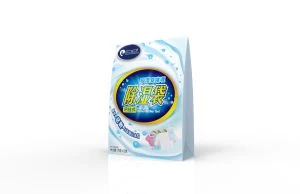

Hey there! As a supplier of clay desiccant, I often get asked how clay desiccant stacks up against activated carbon desiccant. So, I thought I'd break it down for you in this blog post.
Basics of Clay and Activated Carbon Desiccants
Let's start with the basics. Clay desiccant is made from natural clay minerals, usually montmorillonite. It's a cost - effective and eco - friendly option. On the other hand, activated carbon desiccant is made from carbonaceous materials like coal, wood, or coconut shells that have been activated to increase their surface area.


Absorption Capacity
When it comes to absorption capacity, both desiccants have their strengths. Clay desiccant is great at absorbing moisture. It can hold a significant amount of water vapor, which makes it ideal for keeping products dry during storage and transportation. For example, our 4 Unit Clay Based Desiccant can effectively reduce humidity in a sealed environment.
Activated carbon desiccant, however, is more focused on absorbing odors and gases. It has a large surface area with tiny pores that can trap various volatile organic compounds (VOCs), bad smells, and even some harmful chemicals. So, if you're dealing with a situation where odor control is a top priority, activated carbon desiccant might be the way to go.
Speed of Absorption
In terms of the speed of absorption, clay desiccant is relatively fast at absorbing moisture. It starts working as soon as it's exposed to a humid environment. The natural clay structure allows it to quickly attract and hold water molecules.
Activated carbon desiccant also absorbs quickly, but its main target is different. It rapidly adsorbs gases and odors. If you have a space that has a strong smell, activated carbon can start reducing the odor in a short period.
Cost - Effectiveness
One of the big advantages of clay desiccant is its cost - effectiveness. It's generally less expensive to produce compared to activated carbon desiccant. This makes it a popular choice for many industries, especially those with large - scale storage needs. For instance, our 200g Montmorillonite Clay offers great value for money.
Activated carbon desiccant can be more expensive due to the activation process and the raw materials used. However, if odor control is crucial for your application, the extra cost might be worth it.
Environmental Impact
Clay desiccant is a more environmentally friendly option. It's made from natural clay, which is a renewable resource. When it reaches the end of its life, it can be disposed of in an environmentally friendly way. Our Montmorillonite Clay Desiccant DMF Free is not only effective but also free from harmful chemicals like DMF.
Activated carbon desiccant, while it can be made from renewable resources like coconut shells, the activation process often requires a significant amount of energy. This can have a higher environmental impact compared to clay desiccant.
Applications
Clay Desiccant
Clay desiccant is widely used in many industries. In the food industry, it helps keep food products dry and fresh. It's also used in the electronics industry to protect sensitive components from moisture damage. In the shipping industry, clay desiccant is placed in containers to prevent rust and mold growth on goods during long - distance transportation.
Activated Carbon Desiccant
Activated carbon desiccant is commonly used in places where odor control is essential. It's used in air purifiers, refrigerators, and even in some industrial processes to remove harmful gases. In the pharmaceutical industry, it can be used to keep drugs and medical supplies free from odors and contaminants.
Regeneration
Clay desiccant can be regenerated by heating it at a relatively low temperature. This drives out the absorbed moisture, and the desiccant can be reused. This is a great feature as it reduces waste and saves money in the long run.
Activated carbon desiccant can also be regenerated, but the process is more complex. It usually involves heating at a higher temperature and may require special equipment.
Which One to Choose?
The choice between clay desiccant and activated carbon desiccant depends on your specific needs. If your main concern is moisture control and you're looking for a cost - effective and eco - friendly option, clay desiccant is a great choice. On the other hand, if odor and gas absorption are your top priorities, activated carbon desiccant might be more suitable.
If you're still not sure which desiccant is right for you, feel free to reach out. We're here to help you make the best decision for your business. Whether you need a large - scale supply of clay desiccant or have questions about our products, we're just a message away. Let's have a chat and see how we can meet your desiccant needs.
References
- "Desiccant Handbook" - A comprehensive guide on desiccants and their applications.
- Industry research reports on the desiccant market.